Essential Homeowners Insurance Knowledge for Dallas Area Residents
Owning a home in the Dallas area comes with tremendous benefits including strong property values, excellent amenities, and a vibrant economy. It also comes with specific insurance considerations that every homeowner should understand to ensure their most valuable asset is properly protected.
Texas weather patterns create unique challenges for homeowners. From severe thunderstorms producing baseball-sized hail to occasional tornadoes sweeping through the region, Dallas area homes face real risks that your insurance policy needs to address adequately. Beyond weather, understanding what your homeowners insurance covers and what it excludes can mean the difference between recovering from a disaster and facing financial devastation.
Whether you recently purchased your first home, you're reviewing your existing coverage, or you simply want to understand your policy better, this guide covers the essential information every Dallas homeowner needs to know about homeowners insurance.
Understanding the Core Components of Homeowners Insurance
A standard homeowners insurance policy includes several distinct coverage sections, each protecting different aspects of your home and financial well-being. Understanding these components helps you evaluate whether your current coverage is adequate.
The typical homeowners policy includes these key coverages:
Dwelling coverage: Protects the physical structure of your home including walls, roof, attached structures, and built-in appliances. This is usually the largest component of your policy and should reflect the cost to rebuild your home, not its market value or the amount of your mortgage.
Other structures coverage: Covers detached structures on your property like garages, sheds, fences, and gazebos. This is typically 10% of your dwelling coverage but can be increased if needed.
Personal property coverage: Protects your belongings including furniture, clothing, electronics, and appliances. Standard policies typically provide coverage equal to 50-70% of your dwelling coverage, though you can adjust this based on the value of your possessions.
Loss of use coverage: Pays for additional living expenses if your home becomes uninhabitable due to a covered loss. This includes hotel costs, restaurant meals, and other expenses above your normal living costs while your home is being repaired.
Personal liability coverage: Protects you if someone is injured on your property or you accidentally cause property damage to others. Standard policies typically include $100,000 to $300,000 in liability coverage.
Medical payments to others: Provides a small amount (usually $1,000 to $5,000) to cover minor medical expenses for guests injured on your property, regardless of fault.
Each of these coverages works together to provide comprehensive protection for your home, belongings, and financial well-being.
Why Replacement Cost Matters More Than Market Value
One of the most common misconceptions among homeowners is confusing their home's market value with the cost to rebuild it. Your home might be worth $400,000 in the current real estate market, but the cost to completely rebuild it from the foundation up might be $350,000 or $450,000 depending on construction costs, materials, and the complexity of your home's design.
Your homeowners insurance dwelling coverage should be based on replacement cost, meaning the amount it would cost to rebuild your home with similar quality materials if it were destroyed. This is different from actual cash value, which factors in depreciation and would leave you short of the funds needed to fully rebuild.
Market value includes the value of your land, which doesn't need to be insured because it doesn't disappear in a disaster. It also reflects supply and demand factors in the real estate market that have nothing to do with construction costs. A home in a highly desirable neighborhood might have a market value significantly higher than its replacement cost, while a home in a less popular area might be worth less on the market than it would cost to rebuild.
Working with your insurance agent to accurately calculate your replacement cost ensures you have adequate coverage if the worst happens. Factors that affect replacement cost include square footage, quality of materials and finishes, architectural complexity, local construction costs, and special features like custom cabinets or high-end fixtures.
Underinsuring your dwelling coverage to save on premiums can create a financial disaster if you suffer a major loss and discover your insurance doesn't provide enough money to rebuild your home.
Texas Weather: What Homeowners Need to Know About Coverage
Dallas area homeowners face specific weather-related risks that make understanding your coverage particularly important. Texas weather can shift dramatically, and the insurance implications aren't always obvious until you need to file a claim.
Hail damage: North Texas experiences some of the most severe hail in the country. Standard homeowners policies cover hail damage to your roof, siding, and windows. However, many policies now include special deductibles for wind and hail claims that are percentage-based rather than flat dollar amounts. A 2% wind/hail deductible on a home insured for $300,000 means you pay the first $6,000 of damage rather than a standard $1,000 or $2,500 deductible.
Wind and tornado damage: Tornadoes occasionally touch down in the Dallas area, and straight-line winds can cause significant damage. Wind damage is covered by standard homeowners policies, but as mentioned above, often subject to higher percentage deductibles.
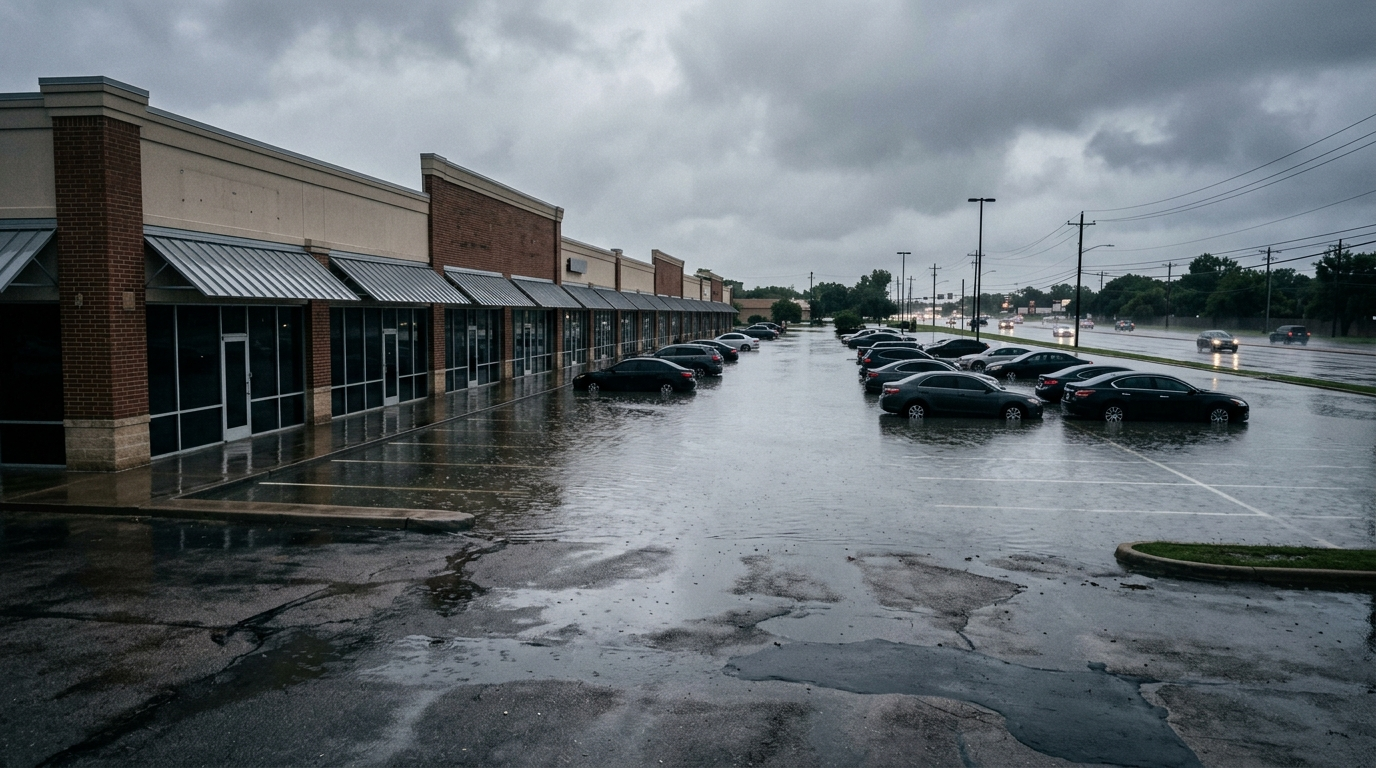
Flooding: This is the big coverage gap most homeowners don't understand. Standard homeowners insurance policies explicitly exclude flood damage. If heavy rains cause water to rise and enter your home from ground level, that's considered flooding and isn't covered by your regular policy. You need a separate flood insurance policy to protect against this risk.
Water damage from storms: Water damage becomes confusing because some scenarios are covered while others aren't. If wind damages your roof and rain enters through the damaged area, that's typically covered. If your home floods because a nearby creek overflows during heavy rain, that's not covered without separate flood insurance.
Understanding these distinctions before severe weather strikes ensures you have appropriate coverage and realistic expectations about what your policy will and won't pay for.
The Flood Insurance Gap Every Dallas Homeowner Should Understand
Flooding represents one of the most significant coverage gaps in standard homeowners insurance, and it's a gap that many Dallas area homeowners don't discover until after water has damaged their property.
Standard homeowners policies exclude flood damage, defining flood as water that rises from ground level and enters your home. This includes scenarios like heavy rainfall overwhelming drainage systems, creeks or rivers overflowing their banks, rapid snow melt (rare in Dallas but possible), and storm surge in coastal areas (more relevant for Texas homeowners near the Gulf).
Many homeowners assume they don't need flood insurance because they don't live in a designated flood zone or near obvious water sources. However, more than 20% of flood insurance claims come from properties outside high-risk flood zones. Urban flooding can occur anywhere due to overwhelmed drainage systems, especially in areas with significant development that has reduced natural water absorption.
Flood insurance is available through the National Flood Insurance Program (NFIP) and through some private insurance companies. NFIP policies provide up to $250,000 in building coverage and $100,000 in contents coverage. Private flood insurance sometimes offers higher limits and additional coverage options.
The cost varies based on your flood zone designation and other factors, but many homeowners outside high-risk zones can obtain flood coverage for a few hundred dollars annually. That modest investment provides significant peace of mind given the potential for catastrophic loss from flooding.
If you have a mortgage, your lender might require flood insurance if your home is in a high-risk flood zone. Even if it's not required, seriously consider whether the protection makes sense for your situation.
Personal Property Coverage: Protecting Your Belongings
Your home's structure is important, but your belongings also represent substantial value that needs protection. Personal property coverage in your homeowners policy protects items like furniture, electronics, clothing, kitchenware, and countless other possessions.
Most homeowners significantly underestimate the value of their belongings. Try mentally calculating what it would cost to replace every item in your home from your furniture and appliances to your clothes, dishes, linens, and electronics. Most households discover their belongings are worth far more than they initially thought.
Standard policies typically provide personal property coverage equal to 50-70% of your dwelling coverage, but you can adjust this amount based on your needs. If you have particularly valuable possessions or simply own many things, increasing this coverage makes sense.
Personal property coverage typically comes in two forms:
Actual cash value: Reimburses you for the depreciated value of damaged items. If your five-year-old sofa is destroyed, you receive what a five-year-old used sofa is worth, not what a new replacement costs.
Replacement cost: Pays to replace damaged items with new ones of similar kind and quality without deducting for depreciation. This costs more but provides better protection.
Replacement cost coverage for personal property is worth the additional premium because it allows you to actually replace your belongings rather than receiving depreciated values that won't cover replacement costs.
Special Limits and Valuable Items That Need Extra Coverage
Standard homeowners policies include special limits for certain categories of property. These sub-limits mean your policy will only pay up to a specified amount for certain items, regardless of their actual value or your overall personal property coverage limit.
Common special limits include:
Jewelry, watches, and furs: Typically limited to $1,000 to $2,500 total per loss.
Silverware and goldware: Usually capped at $2,500.
Cash and coins: Often limited to just $200 to $500.
Securities and valuable papers: Typically $1,000 to $1,500 limit.
Electronics used for business: Often limited to $2,500.
Firearms: Usually capped at $2,000 to $2,500 total.
If you own items in these categories that exceed the policy limits, you need to schedule them separately on your policy through endorsements or purchase a separate valuable articles policy. This involves providing documentation of the item's value (like an appraisal for jewelry or receipts for electronics) and paying additional premium based on the item's value.
Scheduled items receive broader coverage than the standard policy provides, often including accidental loss and mysterious disappearance that wouldn't be covered for unscheduled items. For valuable jewelry, art, collectibles, or other high-value items, this additional coverage provides important protection.
Liability Coverage: Protecting Your Financial Future
The liability section of your homeowners policy protects your financial assets if someone is injured on your property or you accidentally cause property damage to others. This coverage extends beyond just incidents at your home, covering you and household family members for certain personal liability situations anywhere in the world.
Standard policies typically include $100,000 to $300,000 in personal liability coverage, but this might not be adequate depending on your financial situation. If you have significant assets or income, you're a more attractive lawsuit target and need higher liability limits to protect what you've built.
Liability coverage responds to various scenarios:
A guest slips on your icy sidewalk and breaks their leg, requiring surgery and missing work. Your dog bites a visitor, causing injuries that require medical treatment. Your child accidentally breaks an expensive item at a friend's home. Water from your washing machine leak damages your downstairs neighbor's condo unit. Your tree falls and damages your neighbor's home or vehicle.
The liability coverage pays for legal defense costs, medical expenses, and any settlement or judgment up to your policy limit. Legal defense alone can cost tens of thousands of dollars even if you ultimately win the case, making this coverage valuable simply for the defense cost protection.
Many homeowners choose to increase their liability coverage beyond standard limits, and many also purchase a personal umbrella policy that provides an additional layer of liability protection above their homeowners and auto insurance policies.
Deductibles: How They Affect Your Premium and Out-of-Pocket Costs
Your homeowners insurance deductible is the amount you pay out of pocket before your insurance coverage begins paying for a covered loss. Understanding how deductibles work helps you make informed decisions about balancing premium costs with potential out-of-pocket expenses.
Most homeowners policies include two types of deductibles:
Standard deductible: Applies to most types of claims including fire, theft, vandalism, and many weather-related perils. Common amounts include $1,000, $2,500, or $5,000.
Wind and hail deductible: A separate, typically higher deductible that applies specifically to wind and hail damage. In Texas, these are often percentage-based (1%, 2%, or sometimes 5% of your dwelling coverage) rather than flat dollar amounts.
Choosing a higher deductible lowers your premium because you're agreeing to pay more out of pocket before insurance kicks in. This transfers more risk from the insurance company back to you, which they reward with lower pricing.
For example, increasing your standard deductible from $1,000 to $2,500 might reduce your annual premium by $200 to $400. If you don't file claims frequently, you save money year after year, and the higher deductible only matters in the relatively rare event you need to file a claim.
However, this strategy only works if you can actually afford to pay the higher deductible if something happens. Don't choose a $5,000 deductible to save on premiums if paying $5,000 out of pocket would create financial hardship.
Consider your emergency fund, risk tolerance, and claims history when selecting your deductible. For many homeowners, a moderate deductible of $1,500 to $2,500 provides a good balance between premium savings and manageable out-of-pocket costs.
Common Exclusions You Should Know About
Understanding what your homeowners insurance doesn't cover is just as important as knowing what it does cover. Common exclusions that surprise homeowners include:
Flood damage: As discussed earlier, this requires separate flood insurance.
Earthquake damage: Standard policies exclude earthquake damage, though you can typically add it through an endorsement.
Maintenance issues: Damage from lack of maintenance, wear and tear, or deterioration isn't covered. Insurance covers sudden and accidental losses, not gradual problems.
Mold: Many policies limit or exclude mold coverage unless it results from a covered loss.
Business property: If you run a business from home, your business property and liability exposure typically aren't covered under your homeowners policy.
Intentional damage: Damage you cause intentionally isn't covered.
War and nuclear hazards: Excluded from virtually all policies.
Certain breeds of dogs: Some policies exclude liability coverage if you own certain dog breeds deemed high-risk.
Trampolines and pools: Some insurers exclude liability related to trampolines, pools, or diving boards, or require special underwriting.
Reading your policy declarations page and the exclusions section helps you understand your coverage gaps and whether you need additional insurance to fill them.
How to Save Money Without Sacrificing Protection
Homeowners insurance is a significant ongoing expense, but there are legitimate ways to reduce your premium without compromising your protection:
Bundle policies: Combining your homeowners and auto insurance with the same company typically saves 15-25% on both policies.
Increase your deductible: As discussed earlier, accepting higher out-of-pocket costs in exchange for lower premiums can save money over time.
Improve home security: Installing burglar alarms, smoke detectors, and other safety devices often qualifies you for discounts.
Maintain good credit: In Texas, insurers can use credit information when pricing policies, so maintaining good credit helps keep your rates down.
Review coverage annually: As your mortgage balance decreases or your home's contents value changes, you might be able to adjust coverage amounts appropriately.
Shop around periodically: Insurance pricing changes over time, and what was competitive three years ago might not be your best option today. Comparing quotes every few years ensures you're getting good value.
Ask about discounts: Insurers offer various discounts for things like being claim-free, being a long-term customer, having a newer home, or being a retiree.
The key is finding savings through legitimate discounts and smart coverage decisions rather than simply underinsuring your home to get a lower premium.
Working With Princeton Insurance for Your Homeowners Coverage
Navigating homeowners insurance options can feel overwhelming, especially when you're trying to balance adequate protection with affordable premiums. Princeton Insurance helps Dallas area homeowners understand their coverage needs and find competitive policies from multiple insurance companies.
As an independent agency serving Dallas, Garland, Plano, Prosper, and surrounding communities, Princeton Insurance understands the specific risks Texas homeowners face and which coverage enhancements make sense for local conditions. They work with multiple carriers, allowing them to compare options and find you the best combination of coverage and price.
Whether you're shopping for coverage on a newly purchased home, reviewing your existing policy for potential improvements, or simply want to ensure you're adequately protected, Princeton Insurance provides the expertise and options you need.
Protect Your Home With the Right Coverage
Your home represents your largest financial investment and the place where your family creates memories. Protecting it with appropriate homeowners insurance isn't optional; it's essential to your financial security.
Understanding what your policy covers, recognizing coverage gaps like flood insurance, ensuring your dwelling coverage reflects actual replacement cost, and reviewing your liability limits all contribute to having adequate protection when you need it most.
Ready to review your homeowners insurance coverage or get a quote for a new home? Contact Princeton Insurance today. Their experienced team will help you understand your options, identify the coverage that fits your needs, and find competitive rates from multiple insurance companies serving the Dallas area.
Get A Quote
At Princeton Insurance, securing your future is easy. Ready to protect what matters? Contact us for a quick quote and personalized insurance options!
Kelly
Speak to Kelly 24/7
Microphone ready
Start your custom insurance quote
Instant answers to your insurance questions
Schedule appointments or follow-ups
Personal Insurance
From auto and homeowners to renters and umbrella policies, we help protect your family and property. Let’s find coverage that fits your life.
Commercial Insurance
We customize policies for your industry's risks, like general liability and workers' comp, ensuring you can run your business worry-free.
Contact Princeton Insurance
Recent Posts