How business interruption claims work in Dallas
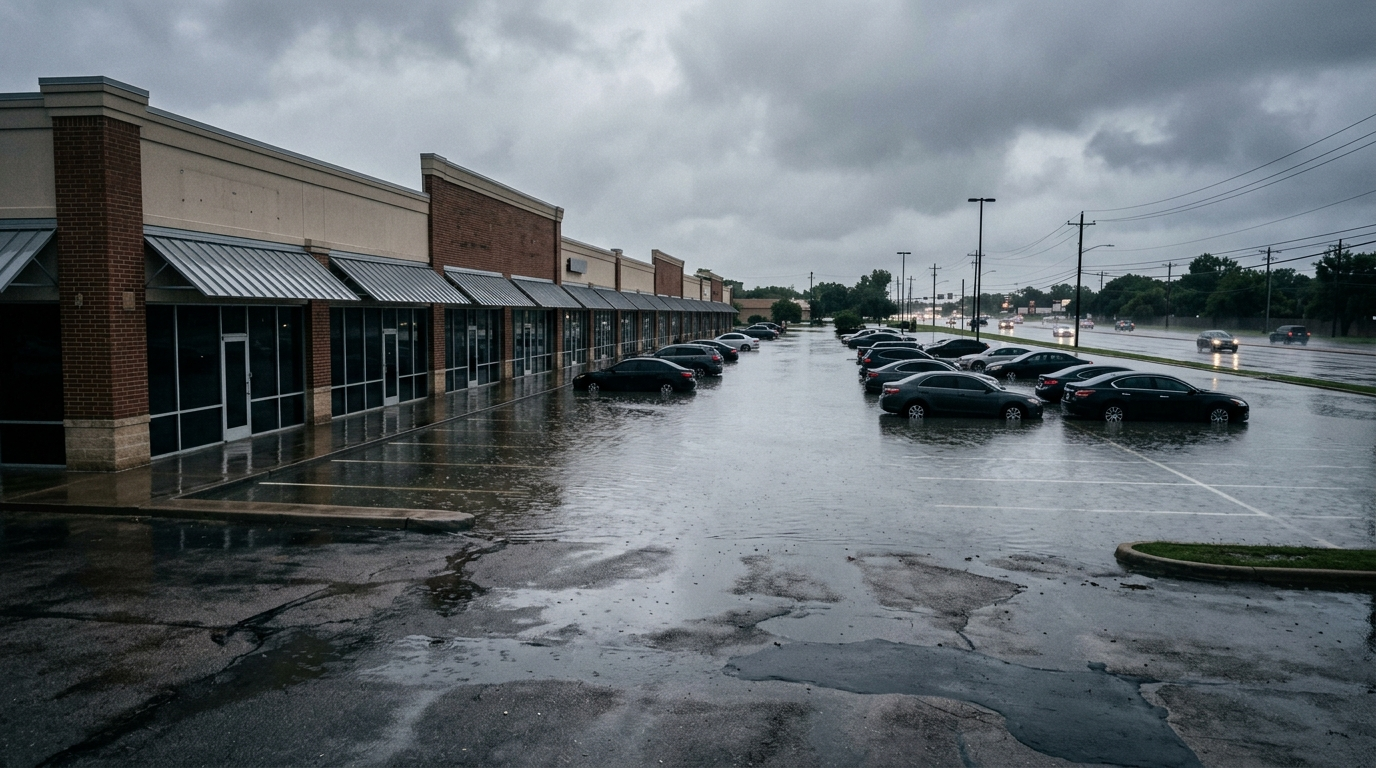
When a fire, storm, or burst pipe forces a Dallas business to close its doors, the financial damage rarely stops at the physical repairs. Business interruption claims in Dallas are often more complex than the property claim that triggers them, and many business owners discover the gaps in their coverage only after a loss has already started eating into their savings. Understanding how the claims process works before something goes wrong can mean the difference between a company that survives a shutdown and one that never reopens.
What business interruption insurance actually covers
Business interruption (BI) insurance is designed to replace the income your business would have earned during a covered shutdown. It is not a standalone policy in most cases. It typically rides alongside a commercial property policy or is bundled into a Business Owner's Policy (BOP). The trigger for a BI claim is almost always a covered physical loss to your property.
Standard coverage generally pays for three categories of loss:
- Lost net income: the profit your business would have earned had the shutdown not occurred.
- Continuing fixed expenses: rent, loan payments, utilities, and payroll that keep accumulating even when the doors are closed.
- Extra expenses: reasonable costs to minimize the shutdown, such as renting temporary space or equipment so you can keep operating in some capacity.
What most standard policies do not cover is worth stating plainly: flood damage, earthquake, utility failures that originate off your premises, and communicable disease or government-ordered closures unrelated to a covered physical loss. The pandemic-era litigation over BI claims made that last point nationally known, and Texas courts largely sided with insurers on the physical-damage requirement.
The restoration period and indemnity period explained
Two time-related concepts drive almost every business interruption claim , and confusing them is one of the most common mistakes business owners make.
The restoration period
This is the window of time your policy will pay. It starts on the date of the covered loss and ends when your property has been (or reasonably could have been) restored to its pre-loss condition. Insurers measure this by what a qualified contractor would need to complete the repairs, not necessarily how long your specific contractor takes. If you wait six weeks to hire a crew and the repair itself only takes four weeks, the insurer may only pay for four weeks of lost income.
The indemnity period
Many policies also include an extended period of indemnity, which stretches coverage beyond the restoration period to account for the time a business needs to rebuild its customer base. A Dallas restaurant might reopen after three months of repairs but take another two months to return to normal revenue levels. A standard 30- or 60-day extended period can help bridge that gap. Extended periods of 90, 180, or 365 days are available but must be selected when the policy is written, not after the loss.
The waiting period (deductible)
Most BI policies have a time-based deductible called a waiting period, typically 48 to 72 hours. No coverage applies until that window has passed. A business that closes Monday morning after a storm may not start accruing a covered claim until Wednesday.
How the claims process unfolds step by step
Filing a business interruption claim in Dallas is not a single phone call. It is a documentation-heavy process that can run parallel to a property claim for months. Here is how it typically moves:
- Report the loss immediately. Call your agent and carrier the same day the physical damage occurs. Late notice is a common reason insurers reduce or deny BI claims.
- Secure and document the property. Photograph and video everything before any cleanup. Do what is reasonably necessary to prevent further damage, but do not begin permanent repairs until the adjuster has inspected.
- Engage a public adjuster or CPA early. Business interruption losses require financial documentation: tax returns, profit-and-loss statements, payroll records, and sales data going back 12 to 24 months. A public adjuster or forensic accountant who specializes in BI claims can help you build the strongest possible loss calculation from the start.
- Submit a proof of loss. Texas law (Texas Insurance Code, Chapter 542) requires insurers to acknowledge a claim within 15 days and accept or deny it within 15 business days after receiving all required documentation. You have 91 days from the date of loss to submit a signed proof of loss under most standard forms, though your policy may set a different deadline.
- Negotiate the loss calculation. The insurer will hire its own adjuster and may dispute your revenue projections. This is the stage where clean financial records and professional representation pay for themselves.
- Receive payment and document extra expenses separately. Keep extra expense costs (temporary rent, equipment rental, expedited shipping) in a separate ledger. They are reimbursed under a different sub-limit, and mixing them with lost income creates confusion.
Why Dallas businesses face specific risks
North Texas weather makes business interruption coverage more than a theoretical concern. The Dallas-Fort Worth metro has experienced some of the most damaging hail events in U.S. history, with several storms over the past decade causing billions of dollars in insured losses across the region. A single large hail event can knock out roof systems across an entire commercial district, triggering simultaneous property and BI claims for dozens of businesses at once.
Winter storms are an equally serious threat. The February 2021 freeze caused widespread pipe bursts that left many Dallas-area businesses without water or climate control for weeks. Business owners who had BI coverage were in a far better position to manage the extended shutdowns than those relying solely on property coverage.
Fire risk is also real. Older commercial strips in areas like Deep Ellum, Oak Cliff, and along the Greenville Avenue corridor often house buildings with aging electrical systems. A single fire in a shared building can force multiple tenants to close even if their own space was not the point of origin.
Beyond weather and fire, supply chain delays have stretched restoration periods longer than historical norms. What used to take three months to repair can now take six or nine because of material and labor shortages. That makes the length of the indemnity period on your policy a more important variable than it was five years ago.
Common reasons business interruption claims get reduced or denied
Knowing the pitfalls ahead of time is the most practical advice an agent can offer. These are the most frequent problems we see:
- Inadequate coverage limits. Many businesses insure for 6 months of income when their realistic restoration period, including extended recovery, is closer to 12. Texas carriers offer limits up to 24 months on many commercial policies; use them if your business would need the time.
- Poor financial records. If your business operates mostly on cash sales or has inconsistent bookkeeping, projecting your lost income becomes a fight with the adjuster. Clean monthly P&L statements, even for a small business, make a BI claim defensible.
- Missing the waiting period. Some owners do not realize coverage has not started yet and make financial decisions assuming the insurer will cover day-one losses. Budget for the deductible period separately.
- Excluded perils. Filing a BI claim when the triggering event is excluded from your property policy (flood, for example) will result in denial. This is why commercial flood insurance and business interruption coverage need to be evaluated together.
- Failure to mitigate. Most policies require you to take reasonable steps to reduce the loss. An owner who refuses a temporary location when one is available may see the claim reduced for the additional lost income that reasonable mitigation would have prevented.
How to make sure your coverage is actually adequate
The right amount of business interruption coverage is not a round number pulled from a brochure. It is a calculation based on your actual financials. A simple starting point: take 12 months of gross revenue, subtract variable costs that would drop to zero during a shutdown (raw materials, shipping), and add 12 months of fixed continuing expenses. That sum is closer to your real exposure than any estimate-based formula.
Review that number annually, especially if your business has grown. A policy written three years ago for a $400,000-a-year operation is almost certainly underinsured for a $700,000-a-year operation today. Texas does not require insurers to automatically update limits, so the responsibility to request increases falls entirely on you.
It is also worth asking your agent about contingent business interruption (CBI) coverage, which extends the protection to losses caused by damage to a key supplier's or customer's property. If your Dallas manufacturing or distribution operation depends on a single supplier and that supplier is shut down by a covered event, CBI can replace income you lose even though your own building is undamaged.
If you want to see how your current commercial coverage stacks up, the post on commercial insurance basics every business owner needs is a solid place to start that conversation.
Get the right business interruption coverage for your Dallas business
Princeton Insurance is an independent agency serving businesses across the Dallas metro, including Dallas, Plano, Frisco, and the surrounding communities. As an independent agency, we compare business interruption policies across multiple carriers to find coverage that actually matches your operation, not just a generic package that checks a box.
If you are not sure whether your current BI limits are realistic, or if you have never had the coverage explained in plain language, we are happy to walk through it with you. Contact us online at Princeton Insurance's contact page or call us directly at (469) 916-9595 . Getting the right coverage in place before a loss is the only time you have that option.
Get A Quote
At Princeton Insurance, securing your future is easy. Ready to protect what matters? Contact us for a quick quote and personalized insurance options!
Kelly
Speak to Kelly 24/7
Microphone ready
Start your custom insurance quote
Instant answers to your insurance questions
Schedule appointments or follow-ups
Personal Insurance
From auto and homeowners to renters and umbrella policies, we help protect your family and property. Let’s find coverage that fits your life.
Commercial Insurance
We customize policies for your industry's risks, like general liability and workers' comp, ensuring you can run your business worry-free.
Contact Princeton Insurance
Recent Posts