Homeowners insurance in Grand Prairie, TX: what local homeowners need to know
If you own a home in Grand Prairie, homeowners insurance in Grand Prairie, TX is one of the most consequential financial decisions you will make. Located between Dallas and Fort Worth, Grand Prairie sits in a region that sees severe thunderstorms, large hail, tornado activity, and flash flooding every year. The right policy protects your home, your belongings, and your finances. The wrong one leaves you writing a check you never expected when a storm rolls through.
Below is a plain-language breakdown of what a standard homeowners policy covers, what it excludes, how Texas-specific rules affect your coverage, and how to avoid the most expensive mistakes Grand Prairie homeowners make when shopping for insurance.
What a standard homeowners policy actually covers
Most homeowners policies sold in Texas follow the HO-3 form, which is an open-perils policy on the dwelling and a named-perils policy on personal property. That distinction matters more than most people realize.
- Dwelling coverage (Coverage A) : Pays to repair or rebuild the physical structure of your home after a covered loss. This amount should reflect the replacement cost of the home, not its market value. In Grand Prairie, construction costs have risen sharply since 2020, so policies that were adequate a few years ago may now leave you underinsured.
- Other structures (Coverage B) : Covers detached garages, fences, sheds, and similar structures. It defaults to 10% of Coverage A, but you can increase it.
- Personal property (Coverage C) : Pays for furniture, electronics, clothing, and other belongings that are stolen or damaged by a covered peril. Standard policies often default to actual cash value (ACV) for personal property, which factors in depreciation. Replacement cost value (RCV) on contents is worth the modest premium increase.
- Loss of use (Coverage D) : Covers hotel stays, restaurant meals, and other living expenses if your home becomes uninhabitable after a covered claim. Usually 20 to 30% of Coverage A.
- Personal liability (Coverage E) : Pays legal defense costs and judgments if someone is injured on your property or you cause damage to someone else's property. Minimum limits of $100,000 are common, but $300,000 or higher is a more realistic baseline given today's liability environment.
- Medical payments (Coverage F) : Covers minor medical bills for guests injured on your property regardless of fault, typically $1,000 to $5,000 .
Texas weather risks that affect Grand Prairie homeowners most
Grand Prairie is in Tornado Alley, and North Texas is one of the most hail-prone regions in the country. Understanding how local risks translate into coverage decisions is where you avoid real surprises and protect real money.
Wind and hail
Wind and hail damage is the most common homeowners claim in the DFW area. Most standard Texas policies cover wind and hail, but many insurers now apply a separate wind and hail deductible expressed as a percentage of your dwelling coverage rather than a flat dollar amount. A 2% wind/hail deductible on a $350,000 home means you pay the first $7,000 out of pocket before the policy pays anything on a hail claim. Read your deductible section carefully and ask your agent to explain it before you sign.
Severe thunderstorms and tornadoes
Grand Prairie has seen significant tornado activity over the decades, and the city's location between two major urban corridors means storms frequently track directly through the area. Tornado damage falls under wind coverage in a standard HO-3 policy, so there is no separate tornado deductible at the state level. Even so, if your home is destroyed, your dwelling limit needs to be high enough to cover a complete rebuild at current material and labor costs.
Flash flooding
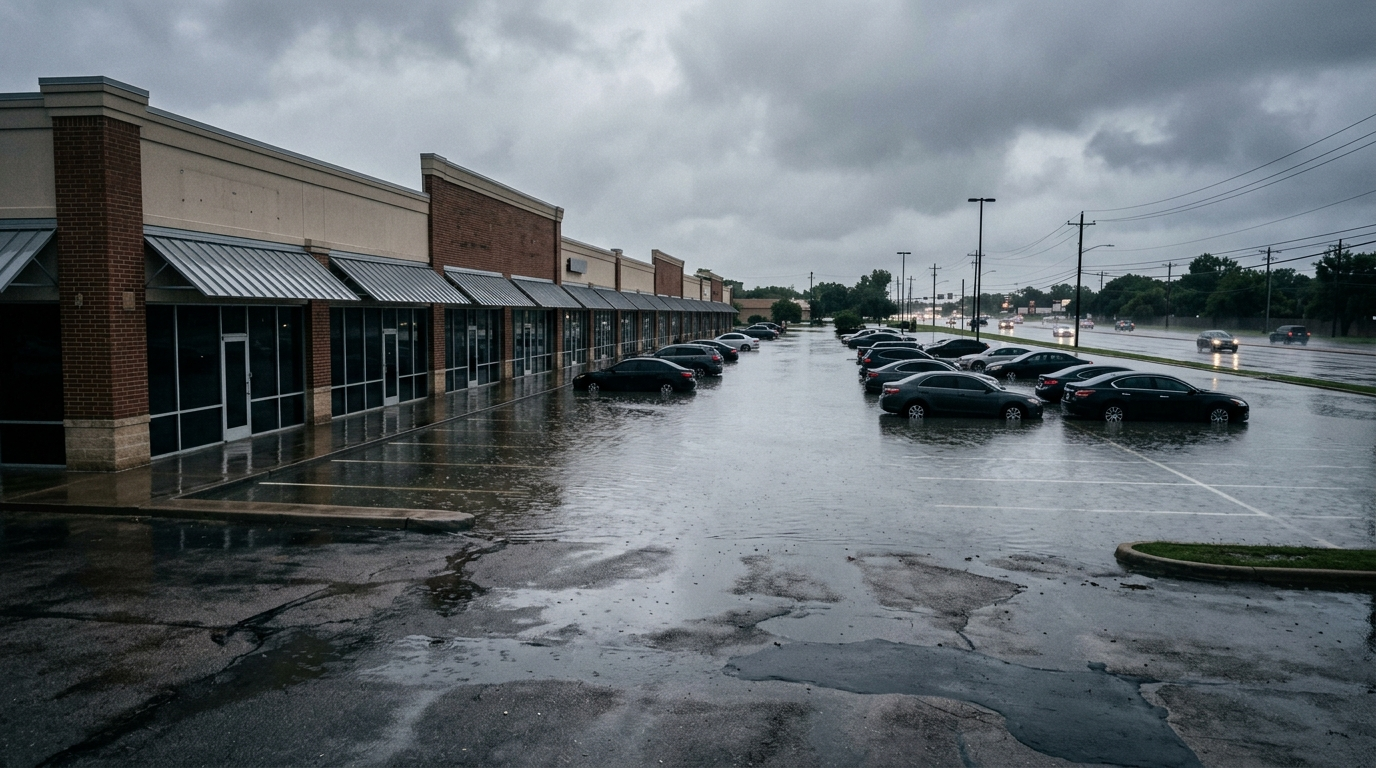
This is where many Grand Prairie homeowners get caught off guard. Standard homeowners policies do not cover flood damage. The Trinity River tributaries and low-lying neighborhoods throughout the city can flood quickly during heavy rain events. If your home sits in or near a flood zone, a separate personal flood insurance policy is not optional. Even homes outside designated flood zones flood more often than people expect, and policies purchased through the National Flood Insurance Program (NFIP) or private flood carriers are available and affordable for lower-risk properties.
Foundation movement
North Texas clay soil expands and contracts with moisture, making foundation movement a widespread problem in Grand Prairie and across DFW. Foundation damage from soil movement is generally excluded from standard homeowners policies. Some carriers offer limited endorsements, but coverage is narrow and subject to significant exclusions. If you are buying a home, a thorough foundation inspection before closing is money well spent.
Common coverage gaps that catch Grand Prairie homeowners off guard
Even a well-structured policy has exclusions. These are the ones that come up most often for North Texas homeowners.
- Sewer and drain backup : Standard policies exclude water damage that backs up through a sewer or drain. An endorsement for water backup coverage typically costs $50 to $150 per year and is almost always worth adding.
- Scheduled personal property : Standard policies cap payouts on categories like jewelry, firearms, silverware, and electronics. If you have $10,000 in jewelry, a standard policy with a $1,500 jewelry sub-limit will not make you whole after a theft. A jewelry floater or scheduled personal property endorsement closes that gap.
- Home-based business equipment : Coverage for business equipment kept at home is typically limited to $2,500 or less on a personal policy. If you run a business from home or keep significant work equipment there, ask your agent what is and is not covered.
- Actual cash value vs. replacement cost on roofs : A roof that is 15 years old will receive an ACV payout after a hail claim, meaning depreciation is applied. On a 20-year-old roof, that check could be a fraction of the actual repair cost. Some carriers now require ACV on roofs over a certain age, so understand exactly how your policy handles roofing claims before you have one.
How Texas regulations shape your homeowners policy
Texas has its own homeowners insurance rules that differ from many other states, and they directly affect Grand Prairie homeowners.
The Texas Department of Insurance (TDI) oversees the market but allows significant pricing flexibility among carriers. Texas is one of the few states that does not use standardized rate-filing restrictions the same way others do, which means premiums can vary dramatically from one carrier to the next for the same property. That is one of the strongest reasons to work with an independent agent who can shop your risk across multiple carriers.
Texas law gives homeowners specific rights when it comes to claims. Insurers have 15 days to acknowledge a claim after it is filed and must accept or reject the claim within 15 business days after receiving all necessary documentation. If the insurer pays late, you may be entitled to interest on top of the claim amount. Knowing these timelines helps you hold your insurer accountable if a claim drags on.
Texas also allows cancellation of a policy within the first 60 days for any reason, but after 60 days the rules tighten significantly. Non-renewal requires advance notice, and insurers must provide a reason. If you have had a policy with a carrier for several years and receive a non-renewal, contact an independent agent promptly so you have time to find a replacement before coverage lapses.
How much does homeowners insurance cost in Grand Prairie?
The average homeowners insurance premium in Texas runs significantly higher than the national average, largely because of hail, wind, and storm exposure in the region. For a typical Grand Prairie home valued at $300,000 to $400,000 , annual premiums commonly fall between $2,500 and $4,500 depending on the home's age, construction type, roof condition, claims history, and the specific carrier and coverage options selected.
Factors that push premiums higher in Grand Prairie include an older roof, proximity to a creek or flood-prone area, a history of prior claims on the property, and construction features that are expensive to replace. Factors that can lower your premium include impact-resistant roofing materials (Class 4 roofing can qualify for meaningful discounts from some carriers), a monitored alarm system, bundling your home and auto policies with the same carrier, and a higher deductible if you can absorb a larger out-of-pocket amount in a claim.
Shopping your policy at renewal is one of the most effective ways to keep costs reasonable. The Texas homeowners market shifts regularly, and a rate that was competitive two years ago may not be today. This is especially relevant now, as several national carriers have pulled back from the state or tightened underwriting in hail-exposed zip codes across DFW.
Homeowners in nearby communities deal with very similar considerations. If you want to see how the picture looks across the broader metro area, our post on what every Dallas homeowner should know about coverage covers many of the same themes in depth.
Tips for choosing the right policy in Grand Prairie
Getting the right homeowners policy is not simply about finding the lowest premium. These practical steps help you make a smarter decision.
- Insure to replacement cost, not market value : Your home's market value includes the land. Insurance needs to cover what it costs to rebuild the structure from the ground up at current labor and material prices. In many Grand Prairie neighborhoods, those two numbers are very different.
- Understand your deductibles before you buy : Ask for a full deductible breakdown: your standard deductible, your wind/hail deductible (if separate), and any other percentage-based deductibles. Know exactly what you would owe before the policy pays on a storm claim.
- Review coverage limits annually : Rebuilding costs have increased significantly in recent years. A home that was adequately insured for $280,000 in 2019 may cost $350,000 or more to rebuild today. Ask your agent to run a replacement cost estimate at every renewal.
- Consider a personal umbrella policy : Liability limits on a standard homeowners policy top out at $500,000 in most cases. A personal umbrella policy adds another $1 million or more of liability protection for a few hundred dollars per year. If you have assets worth protecting, it is usually a straightforward decision.
- Work with an independent agent : Independent agents are not tied to one carrier. They can compare rates and coverage terms from multiple companies and tell you which ones are currently writing new business in Grand Prairie's specific zip codes.
Get a homeowners insurance quote in Grand Prairie today
Princeton Insurance is an independent insurance agency serving Grand Prairie and communities across the DFW area. Because we work with multiple carriers, we compare options on your behalf to find coverage that fits your home, your budget, and the real risks that come with living in North Texas. We are not locked into one company's products, which means our job is to find what works for you, not what works for a quota.
Whether you are buying your first home in Grand Prairie, renewing a policy that feels too expensive, or you have simply never had someone walk you through what your current coverage actually does and does not cover, we are here to help. Visit our homeowners insurance page to learn more, or contact Princeton Insurance to request a quote. You can also reach us directly at (469) 916-9595 .
You can also visit our Grand Prairie location page for more information about the coverage options available in your area.
Get A Quote
At Princeton Insurance, securing your future is easy. Ready to protect what matters? Contact us for a quick quote and personalized insurance options!
Kelly
Speak to Kelly 24/7
Microphone ready
Start your custom insurance quote
Instant answers to your insurance questions
Schedule appointments or follow-ups
Personal Insurance
From auto and homeowners to renters and umbrella policies, we help protect your family and property. Let’s find coverage that fits your life.
Commercial Insurance
We customize policies for your industry's risks, like general liability and workers' comp, ensuring you can run your business worry-free.
Contact Princeton Insurance
Recent Posts